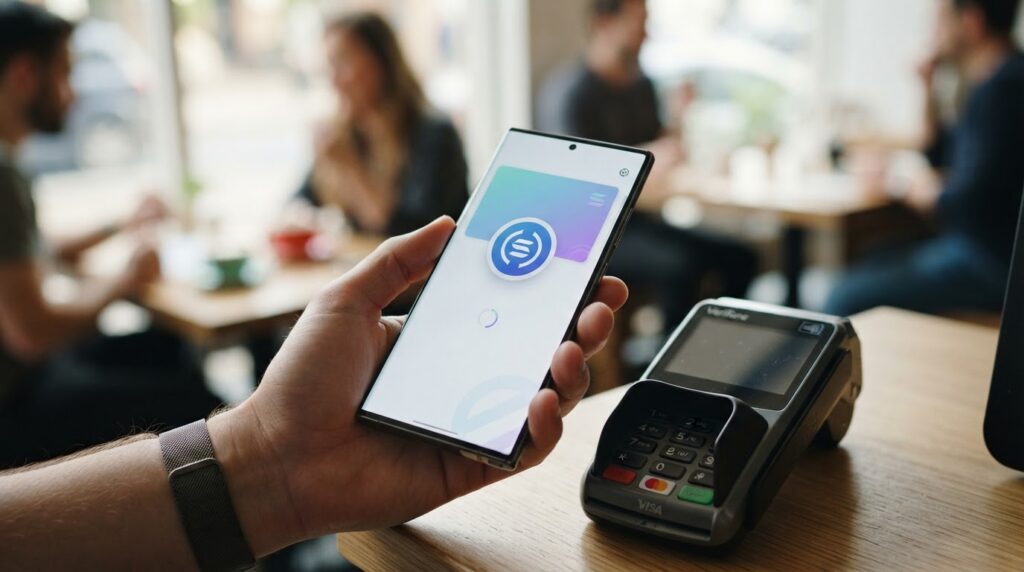
Solana has gained a new onchain privacy option, but it is not a blanket switch that makes blockchain transactions invisible. Helius launched Solana Privacy Rings on mainnet on November 10, according to the Solana Foundation. The permissionless version encrypts balances and asset amounts while leaving wallet addresses visible. That distinction is essential for anyone deciding what the product protects.
The system is presented as a programmable way to add confidentiality to wallets, payments and decentralized finance without moving activity onto a completely separate blockchain. The launch lets developers integrate shielded pools while relying on Solana for execution and settlement.
Private amounts and public addresses are different things
According to the Foundation, users can deposit supported tokens into an encrypted balance, make transfers to a Solana wallet and later withdraw to a public balance. Users control decryption of their private balance with a viewing key, and each transaction still requires the owner’s signature. The permissionless implementation protects information such as balances and transfer amounts, not the fact that a particular wallet address is present on the chain.
That leaves room for observers to study address activity and surrounding transaction context. Privacy on a public ledger is rarely absolute, and encrypted amounts should not be treated as a guarantee that financial behavior is untraceable in every circumstance. For businesses, the relevant question is what is confidential to outsiders, what remains externally visible and what authorized auditors can see.
How it is meant to interact with DeFi
Solana Privacy Rings use onchain programs and zero-knowledge proofs to validate protected actions. The Foundation says the protocol is designed to work alongside existing Solana liquidity and support programmable arrangements including conditional transfers, private escrows, swaps and lending integrations. The possibility of composability is important: an institution might want to settle against public liquidity without broadcasting every amount or position.
However, technical availability does not mean every DeFi protocol or wallet has adopted the features. Developers must implement the interfaces, review their threat models and decide whether the privacy properties meet their requirements. Specific capabilities in example use cases should not be reported as independent production integrations without verification.
Audited does not mean formally proven
The Foundation says the core programs and zero-knowledge circuits were audited by several security firms, while formal verification was still underway with completion expected before the end of 2026. Audits reduce some uncertainty but are not a guarantee that software contains no vulnerabilities. The remaining verification work matters for anyone moving material assets through new smart-contract infrastructure.
Optimisus recently covered Solana USDC’s integration into Samsung Wallet, a distribution story with different custody assumptions. It also explored how application-level assumptions can expose value on public blockchains. Privacy infrastructure adds another surface that needs clear boundaries and independent review.
For now, the concrete news is a deployed, programmable encrypted-balance protocol, not a claim that Solana itself has become anonymous by default. The next signals are developer integrations, real usage and publication of the outstanding formal-verification findings.