The first response from Google’s AI chip in orbit was not a scientific breakthrough written in thousands of lines of code. It was a short poem. The modest output is exactly why the experiment matters: a difficult engineering system first has to prove that it can receive a request, run a model and send back a usable response.
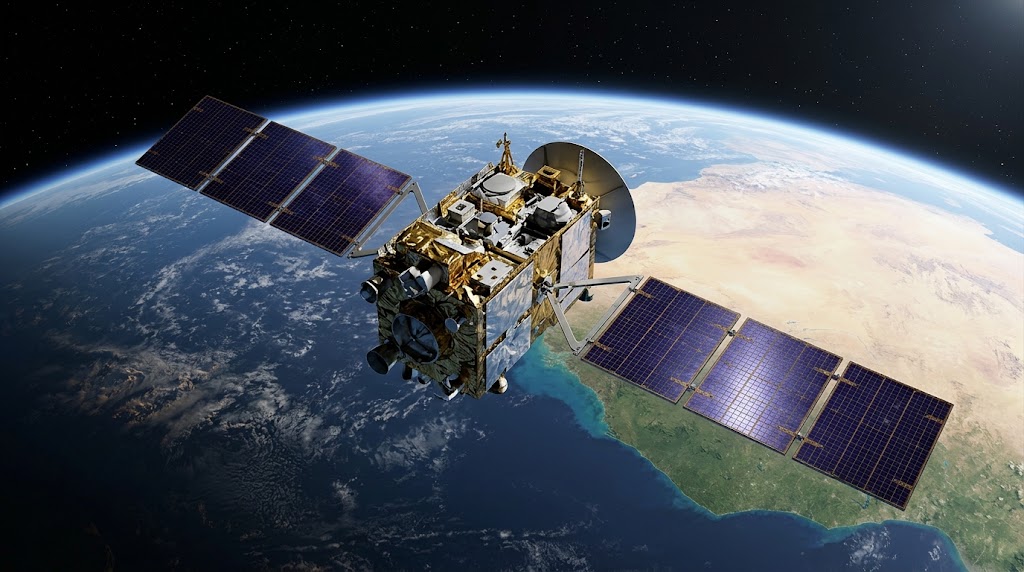
Google said on October 30 that its Project Suncatcher prototype satellite had successfully run a prompt on a data-center-class Tensor Processing Unit, or TPU, while in orbit. During a ground-station pass near Svalbard, Norway, engineers sent a request to the onboard Gemma 4 model and received a space-themed haiku. The company says it was the first AI response of this kind from a data-center-class TPU in orbit.
That is an engineering milestone for a research project exploring AI computation in space. It is not evidence that Google has launched a commercial orbital cloud service, and the company has not claimed that it has.
From launch to a working model
Google launched the prototype on October 1 in partnership with Planet, aboard SpaceX’s Transporter-18 rideshare mission. After establishing contact, the team carried out commissioning checks and powered up the satellite’s host system and TPU hardware.
The first prompts were deliberately small. Following the haiku, engineers tested additional language-generation requests and telemetry questions about the payload. The priority at this stage is confirming that the hardware and communications chain behave as expected before attempting more demanding experiments.
A successful response therefore demonstrates several connected capabilities: the satellite was reachable, the processor could run the model, and output could be returned to the ground. It says much less about sustained performance, total power efficiency or how the system would behave under a commercial workload.
Space changes the assumptions behind cloud computing
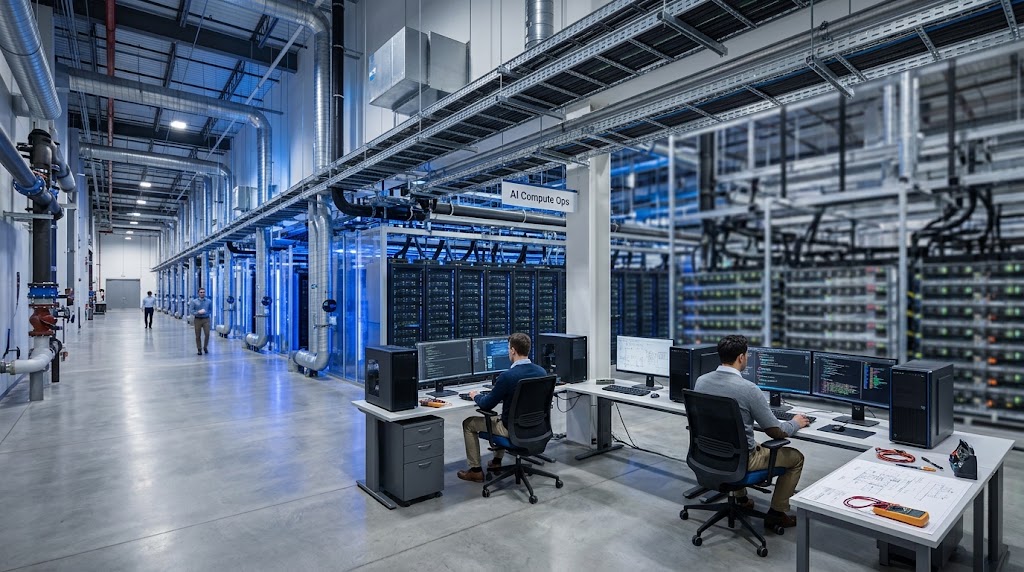
Data centers on Earth contend with electricity demand, cooling costs and the physical limits of building ever larger sites. The attraction of a solar-powered orbital system is the possibility of using abundant sunlight and a different thermal environment to support future computing infrastructure.
But taking AI hardware into orbit creates a new list of constraints. Radiation can damage components or corrupt computation. Temperatures vary sharply. Hardware cannot be repaired with the convenience of an ordinary data-center technician. Data also has to travel between Earth and satellites, and among satellites if a distributed system is to behave like a single compute service.
Google has explicitly identified thermal stress and radiation exposure as the next areas of testing. That is a useful indication of where the proof gap lies. A chip that can complete a small prompt once must still demonstrate reliability under repeated, extended workloads.
Why the next test involves two satellites
The company says it is working toward a pair of interconnected satellites in 2027. Connecting two spacecraft would move the experiment beyond a single onboard processor toward a basic test of distributed orbital computing.
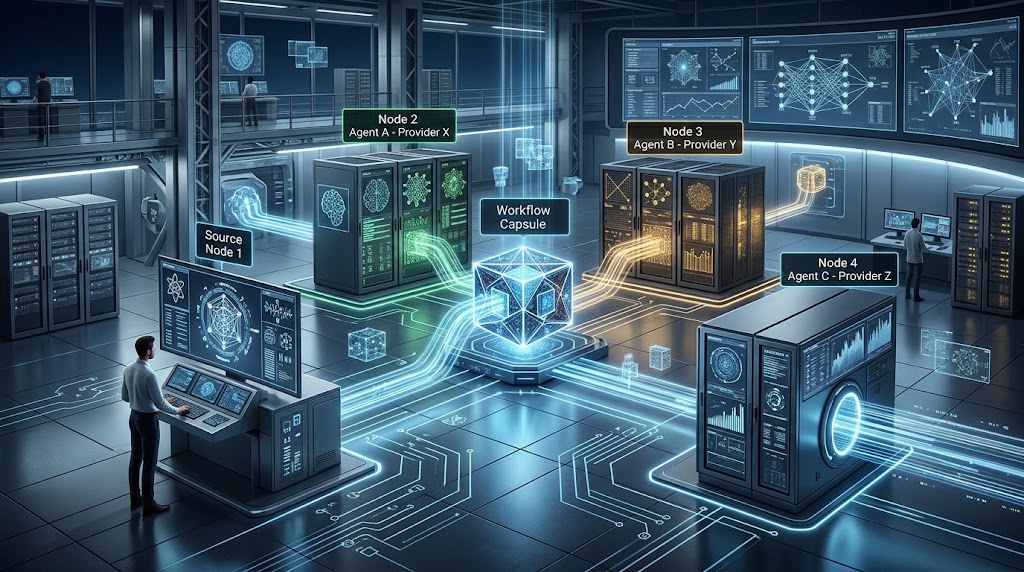
That introduces additional questions about inter-satellite communications, synchronization, scheduling and the cost of delivering data. The answers are not included in the current announcement. Investors and observers should resist translating the existence of a working TPU in space into a timeline for large-scale commercial adoption.
A real result, and a very early one
Google’s experiment is notable because it takes machine-learning computation outside the terrestrial data center and verifies that the first steps can work. That is a more concrete achievement than merely publishing a concept for an AI satellite network.
The commercial question remains wide open. Sending equipment to orbit, replacing failed components and supplying high-bandwidth links all have costs. On Earth, chipmakers and cloud providers can upgrade racks continuously. An orbital operation would have to justify its advantages against that rapidly improving baseline.
Project Suncatcher has now demonstrated an AI output from orbit. What matters next is not whether a model can write a better poem, but whether the system can run reliably, at useful scale, for a price that makes engineering sense.
Primary sources
Google, first Project Suncatcher orbital AI response (October 30, 2026)
Google, Project Suncatcher prototype launch (October 1, 2026)