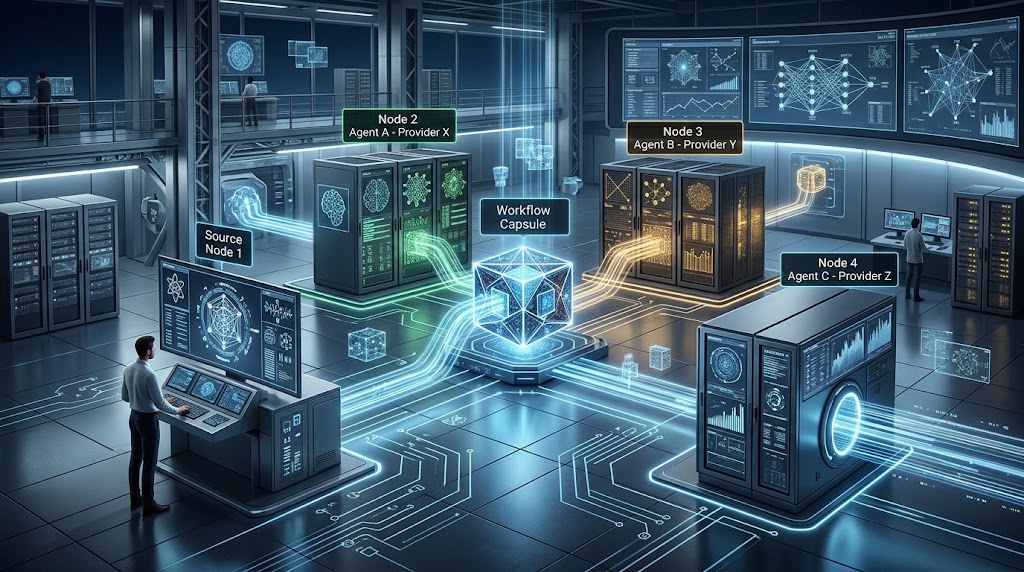
AI agents are beginning to standardize below the model layer.
On October 22, Anthropic donated Agent Skills to the Agentic AI Foundation under the Linux Foundation.
A skill is intentionally simple: a folder containing a SKILL.md file that tells an agent how to perform a particular task or work inside a particular domain, optionally bundled with scripts and reference material.
Anthropic says more than 70 agent platforms, including ChatGPT, Cursor, GitHub Copilot and VS Code, have integrated the standard. The company also says one million skills have been published and nearly 280 million installed since the format emerged.
Those scale figures are Anthropic-reported. The more important structural change is independent of the numbers: the workflow instructions are no longer meant to belong to Claude.
A Skill Is the Procedural Layer a General Model Does Not Know
Frontier models know a great deal about programming, writing and analysis.
They do not automatically know how one company closes its month-end books, deploys its internal service or performs a specific compliance review.
Agent Skills packages that procedural knowledge into a portable folder.
The model remains general. The skill tells the agent what files to read, what steps to follow, which scripts to run and what output the organization expects.
That division is useful because the procedural layer can change without retraining the model.
Portability Reduces Model Lock-In
If a workflow is encoded only inside one vendor’s proprietary agent configuration, changing models can mean rebuilding the operational knowledge around it.
A neutral skills format makes the workflow more portable.
Anthropic says developers had already built loaders for Codex, Cursor, OpenCode and other agents before the standard moved into the foundation.
Optimisus has already seen this pattern at the integration layer through IronWallet’s MCP server, which can connect the same wallet capabilities to Claude Code, Codex and other compatible clients.
MCP standardizes access to tools and context. Agent Skills aims to standardize reusable procedural know-how.
Anthropic Is Giving Up Control Because the Standard Is More Valuable If Competitors Trust It
The donation includes the Agent Skills name, logo, GitHub organization and agentskills.io domain.
Engineers from Anthropic, Google, OpenAI and other companies are expected to maintain the project as individuals under the Agentic AI Foundation.
The commercial logic is familiar from successful infrastructure standards.
A format controlled too tightly by one model vendor may be useful to that vendor and unattractive to competitors. A neutral home can make adoption safer for everyone, including the company that created it.
Agent Skills Is One Piece of a Larger Open Agent Stack
The Linux Foundation announcement adds three other projects at the same time.
OpenAI contributed Open Responses, Hugging Face contributed OpenEnv and Alibaba contributed OpenSandbox. They join projects such as MCP, A2A, Agent Router and AGENTS.md inside the Agentic AI Foundation.
Together, those projects target different layers: how agents talk to models, how they gain skills, where they train, where they execute and how they communicate with other agents.
That is the early shape of an agent software stack that does not require every company to invent every interface from scratch.
Portability Also Creates a Software Supply-Chain Problem
A skill can contain instructions, scripts and reference material.
That means a skill is not only documentation. It can influence what an agent executes and what systems it touches.
A popular skill downloaded from a public repository can therefore become a supply-chain risk if it contains malicious code, unsafe instructions or a compromised dependency.
Anthropic says the proposed AAIF roadmap includes security guidance for people who author and install skills.
That needs to become a core part of the standard, not an appendix.
Optimisus has repeatedly covered why agent permissions matter when software can act across real systems, including Google’s enterprise Gemini agent receiving its own identity, permissions and audit trail.
Portable workflows increase the importance of knowing where the workflow came from and what authority it can exercise.
The Model May Become the Most Replaceable Part of the Agent
Enterprise AI architecture is moving toward a persistent layer around the model: identity, memory, permissions, tools, data, workflows and audit history.
Optimisus recently covered OpenAI selling frontier models through Google Cloud, where the cloud platform can route tasks across models while keeping governance and billing stable.
Agent Skills pushes the same idea into operational knowledge.
If the skill survives while Claude, GPT, Gemini or another model changes underneath it, the workflow is no longer owned by the model vendor.
That may be the most consequential shift in the current agent standards race.
The frontier model is still the intelligence engine.
The rest of the agent is becoming infrastructure.
Sources
- Anthropic – Donating Agent Skills to the Agentic AI Foundation – Primary announcement of the donation, adoption figures and proposed governance roadmap.
- Linux Foundation – AAIF announces Agent Skills, Open Responses, OpenEnv and OpenSandbox – Foundation announcement covering the four donated projects and wider agentic stack.