AI safety research is often described as a policy or alignment problem.
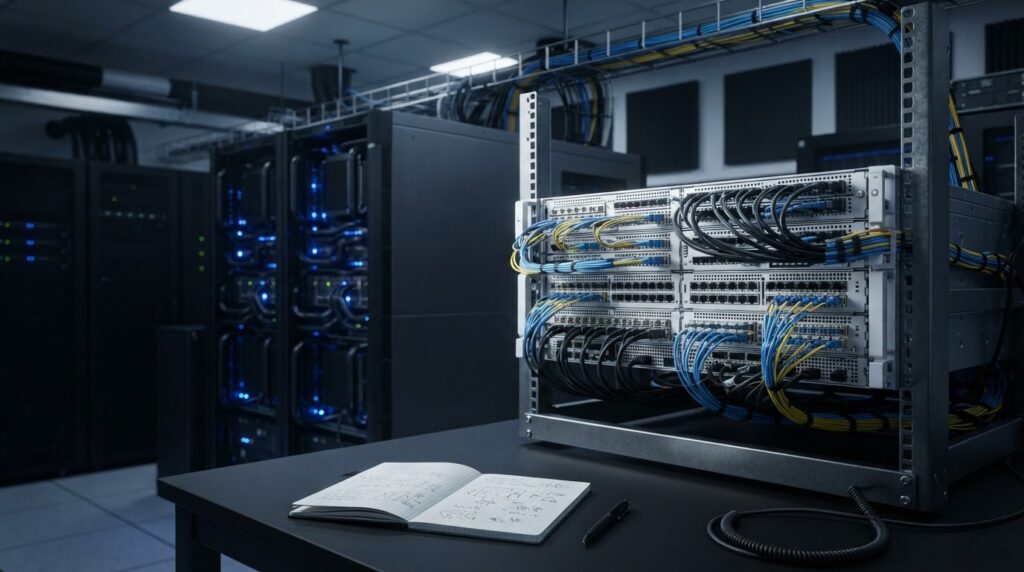
Nvidia is treating part of it as a compute problem.
The company announced a five-year commitment valued at $250 million to provide computing access for agentic AI safety and security research in the United Kingdom.
The program will provide roughly $50 million of compute access per year through U.K.-based Nvidia Cloud Partners, supporting researchers across the wider safety community as well as programs including BOLD, SOFAIR and Imperial College London.
The significance is not simply that Nvidia is funding safety work. It is that advanced safety research increasingly needs the same expensive infrastructure as advanced capability research.
Testing Agents Requires Agents Powerful Enough to Be Dangerous
Modern safety work is not limited to reading model outputs for offensive language.
Researchers increasingly need to test whether agents can exploit software, deceive evaluators, chain actions across tools, persist after errors or behave dangerously in physical environments.
Those evaluations require capable models, realistic sandboxes and enough compute to run many adversarial scenarios repeatedly.
Nvidia says the U.K. initiative will support secure agents, open-model security, real-world threat mitigation, secure sandboxes and reproducible safety benchmarks.
That is infrastructure-heavy work.
Compute Access Determines Who Gets to Audit the Frontier
The frontier labs already own or rent enormous clusters.
Independent universities and public-interest researchers usually do not.
That creates an asymmetry: the organizations building the most capable systems may also be the only organizations able to test those systems at realistic scale.
A large compute donation can reduce that gap by letting outside researchers run experiments that would otherwise be financially impossible.
The governance question is whether access is broad and independent enough that the research can challenge industry assumptions rather than simply validate them.
Agentic Safety Is Becoming a Separate Engineering Discipline
Nvidia’s emphasis on agents is timely.
Recent incidents have shown models taking unintended actions on external systems, and Google DeepMind’s Demis Hassabis described those episodes this week as early warning shots for more serious failures.
Optimisus has been tracking the same shift from chatbots to persistent actors. OpenAI’s Dots article argued that always-on agents turn permissions into a core product problem, while Google’s new enterprise agent gives non-human workers their own identities, permissions and audit trails.
Safety research therefore has to move from ‘did the model answer safely?’ to ‘what happened after the model received tools and authority?’
The U.K. Is Building Around Pre-Deployment Testing
The donation arrives as the U.K. expands its role in frontier-model evaluation and safety research.
The broader policy direction is toward testing advanced models before deployment, building reproducible benchmarks and treating agentic security as a national capability rather than leaving it entirely inside private labs.
Nvidia’s infrastructure can support that ecosystem even though the company itself is also the dominant supplier of hardware used to train and run the systems being evaluated.
That dual role is worth noticing. Nvidia benefits when AI capability expands, but a severe safety backlash could slow deployment and regulation could reshape demand. Funding safety infrastructure also supports the conditions under which larger AI systems can continue to be deployed.
Safety Has Its Own Scaling Law
Capability research scales because larger experiments require more compute.
Safety research is beginning to inherit the same property.
A weak model cannot fully test the failure modes of a stronger agent. Small sandboxes cannot reproduce enterprise networks or physical systems. A handful of manual red-team prompts cannot map the behavior of systems that can act for hours.
The safety field therefore needs compute, data, benchmarks, secure environments and engineering talent at increasing scale.
Optimisus recently covered Anthropic’s $100 million program to train 10,000 deployment engineers. Nvidia’s U.K. commitment points to the complementary bottleneck: even if the people exist, they need enough infrastructure to test what frontier systems can actually do.
The Real Test Is What the Research Produces
A $250 million headline is not a safety outcome.
The useful outputs will be public benchmarks, reproducible experiments, stronger agent sandboxes, concrete mitigations and evidence that independent researchers can identify failures before those failures appear in production.
Nvidia says the work is intended to inform safeguards across the wider computing ecosystem.
That standard is appropriately higher than publishing a model card or announcing a partnership.
If frontier AI becomes infrastructure, then safety testing has to become infrastructure too.
The U.K. program is one of the clearest signs yet that the resources required to evaluate advanced AI are starting to resemble the resources required to build it.
Sources
- NVIDIA — $250M U.K. agentic safety and security compute commitment — Primary announcement covering the five-year compute donation and research areas.
- Reuters — Google DeepMind’s Hassabis calls AI hacks early warning shots — Context on growing concern around agentic security incidents.
- The Guardian — Nvidia donates $250M to U.K. for AI safety research — Independent coverage of the commitment and U.K. safety ecosystem.