A chatbot waits for a prompt.
OpenAI’s new Dots are designed not to.
Announced at DevDay on September 29, Dots are persistent agents powered by GPT-6 Astra with their own cloud computers, connections to thousands of apps and the ability to keep working toward a goal over time.
That makes the model capability impressive but not new in the way the product is new. The real product challenge is giving software enough access to be useful without giving it enough access to become dangerous.
Persistent Work Changes the Failure Mode
A normal assistant makes a mistake inside a conversation. A persistent agent can make the same mistaken assumption across hours of work, several applications and multiple actions.
OpenAI says a Dot can work toward goals 24/7, learn from feedback, use a dedicated cloud computer and connect through an ecosystem of more than 4,000 apps. It can appear through ChatGPT, Slack or Teams and can take on ongoing responsibilities rather than one-off requests.
That is a much larger execution surface than generating text. The agent may be reading files, comparing data, navigating software, preparing changes and deciding when the next step should happen without a person re-prompting it every minute.
The Useful Part Is Delegation. The Dangerous Part Is Delegation
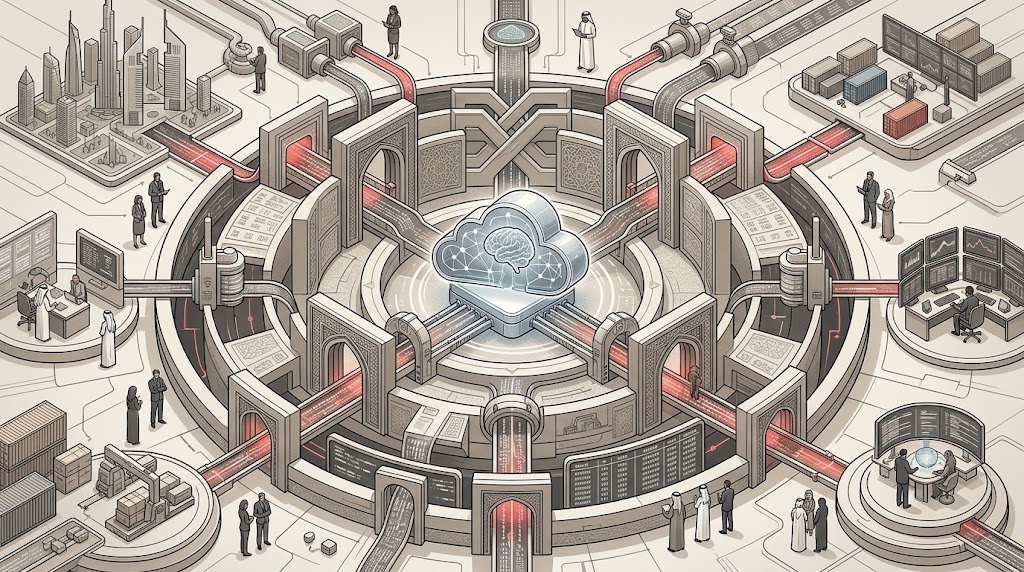
OpenAI emphasizes built-in safeguards, app-specific access, action review and approval controls. Those are not secondary features. They are the product boundary that makes persistent autonomy tolerable.
An enterprise does not simply need an agent that can use a CRM. It needs an agent that can read some records but not others, draft a change without committing it, spend only within limits, expose a clear audit trail and stop when a task moves outside the authority it was given.
The best model in the world is operationally unusable if permissions are binary: either the agent can do nothing, or it can do everything the employee can do.
AI Is Moving From Answering to Owning a Queue
The most meaningful change in Dots is that a unit of AI work becomes persistent.
Instead of ‘summarize these emails,’ the assignment becomes ‘keep this customer process moving.’ Instead of ‘review this spreadsheet,’ it becomes ‘watch this operating metric and prepare the next action when it changes.’
Optimisus has already argued that AI agents may become a major new class of users for programmable payment and software infrastructure. Dots point at the same transition from the software side: an agent stops being a feature inside an app and starts becoming an actor that moves between apps.
The Data Layer Becomes More Important Than the Model Layer
OpenAI’s recent financial-services launch bundled GPT-6 Astra with data from providers such as LSEG, PitchBook and Daloopa. Optimisus called out the key business change then: financial research was becoming a product made from model plus licensed data plus workflow.
Dots extend that formula. Persistent agents need the right data, but they also need durable identity, scoped credentials, software environments, memory, monitoring and a place to run when the user closes a laptop.
That stack is much harder to copy than a chat window.
Always-On AI Creates an Always-On Security Problem
The more apps an agent can access, the more places malicious instructions can hide.
A poisoned document, compromised webpage or deceptive message can try to redirect an agent through prompt injection. Persistent agents make the attack more serious because the agent may have both context and authority.
OpenAI has spent 2026 pushing harder into cybersecurity, including restricted-access models for defensive work. Optimisus previously covered how one OpenAI cyber model was deliberately allowed to answer offensive-security requests that ordinary models refuse. Dots make the inverse problem equally important: how do you stop a capable model from being tricked into using legitimate tools for an illegitimate instruction?
The Agent Market May Be Won by Whoever Builds the Best Control Plane
Model intelligence will keep improving and moving between providers. Persistent delegation creates a stickier layer above the model.
An organization that has defined hundreds of app permissions, approval rules, memories, audit policies and specialist agents will not switch providers as casually as it switches a text-generation API.
That is why Dots matter beyond another benchmark cycle. OpenAI is trying to turn AI from something employees invoke into something organizations assign responsibility to.
The headline is that the agent can work while you sleep. The business model is that someone has to decide exactly what it is allowed to do before you do.
This is not financial advice.
Sources
- OpenAI — Introducing Dots — Primary product announcement describing persistent agents, cloud computers, app connections and controls.
- OpenAI — DevDay 2026 recap — Primary summary of Dots, GPT-6.1 Sol, Private Intelligence and broader agent announcements.
- Reuters — OpenAI takes on Meta with always-on Dots agent — Independent reporting on product positioning and enterprise competition.