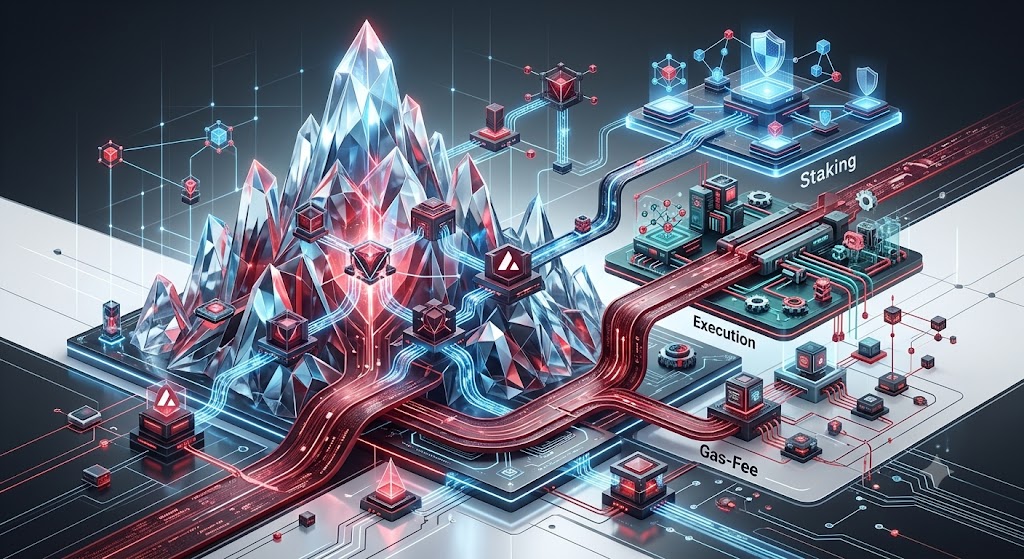
The Fuji Testnet release introduces shorter validator commitments, a new execution model and dynamic gas pricing, while the mainnet timeline remains unconfirmed.
Avalanche has activated the Helicon upgrade on its Fuji Testnet, beginning a live test of changes that could reshape validator staking, C-Chain execution and network fee behaviour.
Helicon went into effect on Fuji at 11:00 a.m. ET on July 28, 2026. Avalanche developers said a mainnet-compatible release will be published only after the testnet deployment has been verified, meaning the upgrade is not yet active on Avalanche Mainnet.
The release combines six Avalanche Community Proposals covering staking duration, validator renewal, transaction execution, uptime requirements, gas pricing and the network’s staking reward curve.
Auto-renewing staking reduces validator downtime risk
One of the largest changes is ACP-236, which introduces auto-renewed staking. Under the existing model, validator commitments end at a fixed time and operators must submit a new transaction to continue validating.
The new design allows validators to renew automatically until the operator chooses to exit. It also supports configurable reward compounding, which could reduce the operational work required to maintain long-running validator positions.
AVAX remains central to this process because the token is used to secure Avalanche through staking. Current Primary Network documentation states that a validator must stake at least 2,000 AVAX, although protocol parameters can change through future upgrades.
Minimum staking duration falls to 48 hours
ACP-273 reduces the minimum staking duration to 48 hours. Shorter commitments may make testing and temporary participation easier, while giving professional operators more flexibility in managing validator capital.
The change does not remove staking risk. Validators must still meet protocol requirements, and rewards remain dependent on uptime, network rules and the amount of AVAX committed.
Continuous execution changes how the C-Chain processes work
Helicon also introduces Streaming Asynchronous Execution through ACP-194. The proposal separates block acceptance from the final settlement of transaction effects, allowing the C-Chain to continue processing work rather than waiting for each block’s execution to finish before moving forward.
For developers and infrastructure providers, that means applications may need to account for a short interval between block acceptance and state settlement when reading receipts or querying the latest state.
Avalanche expects the model to improve execution efficiency, but its real performance will depend on Fuji testing and the behaviour of applications, nodes and monitoring systems under production-like load.
Gas pricing becomes more dynamic
ACP-283 introduces a validator-voted minimum gas price rather than relying on a fixed floor. Applications and infrastructure providers will need to read current fee parameters from the network instead of assuming that the minimum remains constant.
The upgrade package also incorporates a higher validator uptime requirement. Validations beginning on or after April 1, 2026 are subject to a 90% uptime threshold, compared with the previous 80% requirement for older commitments.
A separate proposal, ACP-285, gradually adjusts the minimum consumption rate used in staking economics after activation instead of changing the reward curve in a single step.
What happens before a mainnet release
The Fuji deployment gives node operators and developers a chance to test the new transaction types, staking behaviour and execution model before a mainnet-compatible version is released.
Avalanche has not announced a mainnet activation date for Helicon. The next milestone will be confirmation that the testnet upgrade is stable, followed by release notes and coordination guidance for validators, exchanges, wallets and application teams.
Why Helicon matters for AVAX
Helicon expands the operational role of AVAX by changing how validators commit and remain active on the network. It may also improve the C-Chain’s ability to process work and adapt fees, which could support higher application demand if the changes perform as intended.
However, a technical upgrade does not guarantee higher network usage or a stronger AVAX price. Adoption will depend on developers, users, liquidity and the success of the eventual mainnet rollout.
This article is for informational purposes only and does not constitute financial or investment advice.
Sources
1. Avalanche Builder Hub: Helicon – Improved Staking Economics and Continuous Execution
2. Avalanche technical changelog for Helicon