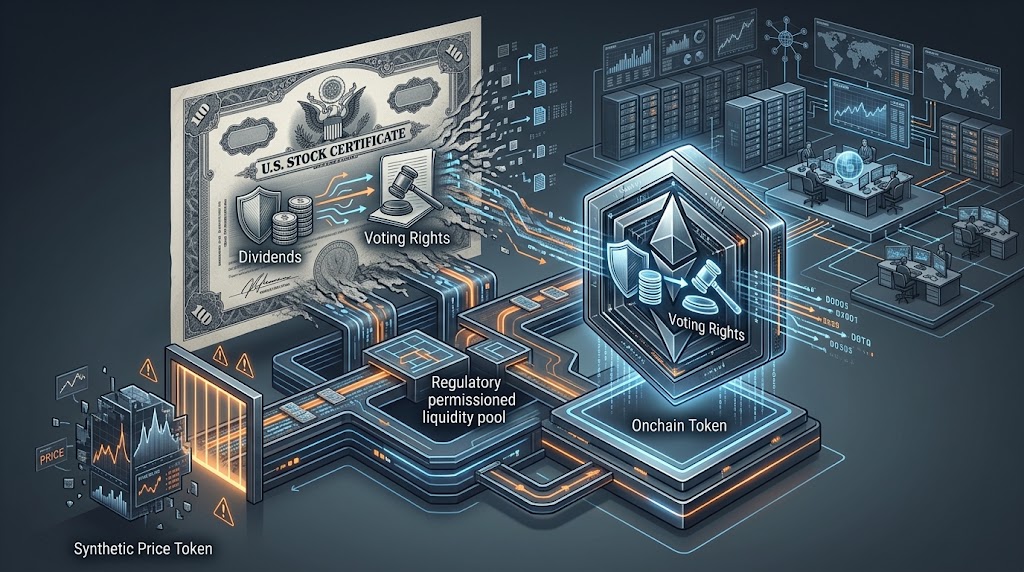
When Robinhood launched its own blockchain on July 1, the company’s pitch was about infrastructure. A permissionless, Arbitrum-based Layer 2 network built to move tokenized stocks and bonds on-chain. Day-one integrations from Uniswap and Chainlink gave it instant institutional credibility.
A week later, the chain’s most-traded asset had nothing to do with tokenized equities. It was a cartoon cat.
Where the Name Actually Came From
CASHCAT is a community-created memecoin. It has no official affiliation with Robinhood, the company. The name is a deliberate nod to company history. Before Vlad Tenev and Baiju Bhatt settled on the name Robinhood, the founders had informally called their startup “CashCat,” according to a New Yorker profile cited by Fortune. The mascot never made it to market. Nearly two decades later, an anonymous community resurrected it as a token.
CoinMarketCap lists CASHCAT as unverified. Its social channels are marked as third-party accounts. No statement from Robinhood has confirmed any formal relationship with the project.
The Tweet That Lit the Fuse
CASHCAT existed quietly for its first week on-chain, trading in the low millions in market value. That changed on July 8.
Robinhood CEO Vlad Tenev posted on X: “While we’re building Robinhood Chain to be the best chain for RWA… it works great for memes too.” He followed it up by following the official CASHCAT account. The market read it instantly as a wink of approval, official affiliation or not.
Within 24 hours, CASHCAT surged between 700% and 962%. Some tracking services recorded intraday peaks above 1,100%. Its market capitalization jumped from the low millions to somewhere between $68 million and $150 million, depending on the exact hour measured. Trading volume exceeded $33 million in a single day, according to CoinGecko data.
The Trader Stories, and the Risk Underneath Them
The rally minted a handful of extraordinary paper fortunes. CoinDesk reported that the five most profitable wallets tied to the token had realized roughly $3.7 million in combined gains. One trader turned an $800 stake into more than $1 million.
Other accounts circulating in crypto media described even larger multiples on smaller initial stakes. Those figures come from less rigorously verified sources. Read them with caution.
CoinDesk was direct about the other side of the story. Thousands of later traders effectively provided the exit liquidity for the earliest buyers. The token continues to trade on thin liquidity with sharp, unpredictable price swings. That is the defining risk profile of any purely narrative-driven memecoin.
By July 11, CASHCAT had pushed past a $200 million market capitalization at its record high. It hit an all-time high price of $0.211 before easing to around $0.193, a market cap near $192 million. BeInCrypto reported the token was up more than 4,000% over the preceding week.
Fresh derivatives access helped fuel the move. Hyperliquid listed CASHCAT perpetual futures with up to 3x leverage by community request. The token also expanded to Solana through a bridge called Sunrise. On-chain data showed net buying pressure, including a wallet linked to well-known crypto trader Ansem moving roughly $233,000 into the token.
A Memecoin Briefly Outran One of DeFi’s Biggest Platforms
The scale of CASHCAT’s trading activity had a genuine market-structure consequence.
On July 8, Robinhood Chain recorded between $560 million and $570 million in 24-hour decentralized exchange volume. That momentarily overtook Hyperliquid as the top DEX by that specific daily metric. Hyperliquid had posted $492.7 billion in volume and a record-setting roughly $161 million in net revenue in the first quarter of 2026 alone, so the displacement was notable even if brief.
CASHCAT alone accounted for close to $98 million of that figure. That’s roughly 17% of the chain’s entire daily volume. Strip the token out, and Robinhood Chain’s activity drops considerably. The remainder is still substantial for a network barely a week old.
Active addresses on the chain approached 200,000 that day. More than 140,000 of them were first-time users. That’s a signal of genuine new demand, not just existing DeFi traders rotating between chains.
By July 10, Robinhood Chain’s DEX volume had climbed to a record $846.8 million, per Dune Analytics data. Active addresses hit an all-time high of 306,893, split almost evenly between new and returning users. The chain’s total value locked crossed $100 million within its first week. Notably, that figure was driven primarily by lending activity on Morpho, not speculative token positions. That suggests at least some of the new user base arrived seeking yield, not pure speculation.
What It Means, and What It Doesn’t
For Robinhood, the memecoin frenzy is a genuinely mixed result.
A brand-new blockchain needs transactions and active wallets to look alive. Speculative trading delivers both far faster than tokenized government bonds ever could. The company had spent months positioning the chain as serious infrastructure for real-world assets. What arrived first, as one report put it, was “a cat with a fistful of cash.” A CEO spent the following week arguing this was precisely the kind of organic activity crypto needed to outgrow, even while quietly encouraging it.
Trading volumes have already begun stabilizing below their July 8 peak. That’s the expected pattern after any memecoin-driven spike.
The open question is what the floor looks like once CASHCAT’s volatility fully normalizes. And whether the roughly 150,000 first-time users the token pulled onto Robinhood Chain stick around once the current cycle fades, or move on to whatever the next viral token turns out to be.