The organization at the center of America’s securities plumbing has started operating a tokenization service. That is a more consequential milestone than another asset manager issuing a tokenized fund share.
On October 28, the Depository Trust Company, a subsidiary of DTCC, launched the DTCC Tokenization Service. Eligible participants can create tokenized representations of securities already held in DTC custody, convert between conventional and tokenized forms, and move the resulting entitlements to registered digital wallets.
The numbers surrounding the launch need separating. DTCC says DTC holds more than $114 trillion in assets. That is the size of the existing custody system, not the amount transferred onchain this week. Twenty DTC participants have signed access agreements, which is not the same as twenty institutions actively conducting tokenized trades at material volume.
What Changed on October 28
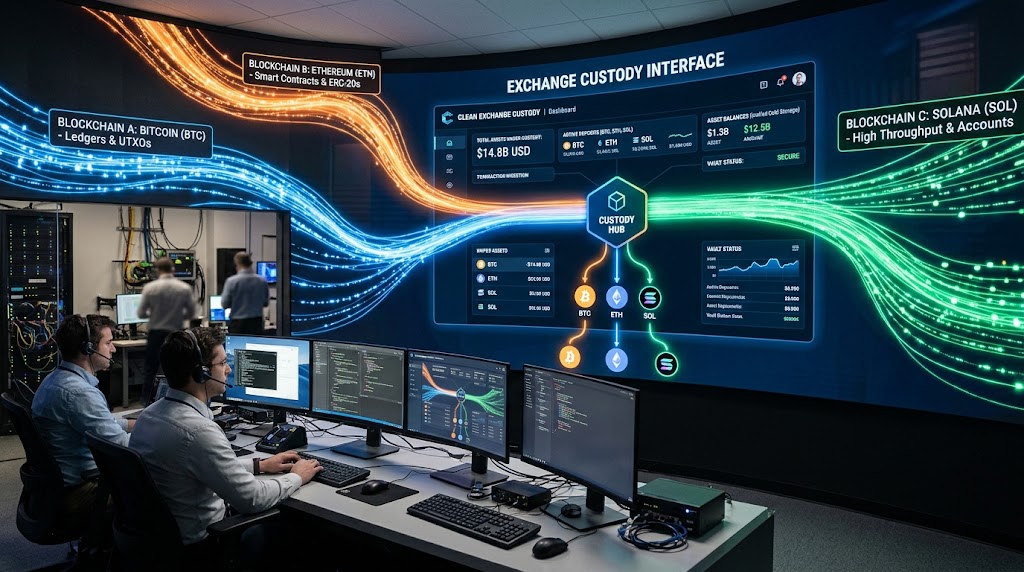
DTCC has moved from demonstrations to an operational service. The initial network integrations are Canton Network and DTCC’s private Besu environment. Additional networks are expected in 2027, so reports that treat planned public-chain access as already live are getting ahead of the implementation.
The service issues what DTCC calls digital twins of securities in custody. They preserve the existing economic entitlements, ownership rights and protections attached to the underlying instruments. They are not synthetic tokens that merely track a stock price.
This is different from a crypto exchange issuing a price-linked token on its own ledger. It starts with the institution maintaining the original securities infrastructure and extends that system into tokenized form.
The Important Number Is Twenty, Not $114 Trillion
DTCC’s participant list includes JPMorgan, Bank of America, Citi, Morgan Stanley, Fidelity Investments, State Street, UBS and other brokers and financial infrastructure firms. More than 150 firms contributed input through its industry working group.
This gives the project something many tokenization pilots lack: distribution through the participants already responsible for custody, trading and post-trade workflows. That does not guarantee meaningful adoption, but it solves part of the onboarding problem that has repeatedly limited isolated tokenization projects.
CoinDesk reported that 34 securities are eligible at launch, representing approximately $30 trillion in market value. Again, this is the market value of assets eligible to be tokenized, not tokens already issued or capital already settled onchain.
For readers tracking Optimisus’ earlier DTCC and BitGo coverage, the significance is that custody interoperability is now part of a working post-trade product rather than a partnership announcement.
Onchain Transfers Do Not Erase the Traditional Register
DTC’s architecture allows approved tokenized entitlements to move between registered wallets, including outside conventional market hours. It still operates inside a controlled custody and legal framework.
The token does not automatically become a freely transferable security that any anonymous wallet can receive. Eligibility, identity controls, transfer restrictions and the rights record remain critical. A wallet transfer and final legal settlement are related but not interchangeable concepts.
That distinction matters because some securities tokenization projects aim to replace the share register, while others make a synchronized representation of securities held elsewhere. DTCC’s approach belongs to the second category.
Optimisus examined the alternative in its reporting on proposals for blockchain-based share registers. It is an important comparison, not a description of what DTS has already done.
The Real Test Is Collateral Mobility
A tokenized Treasury becomes commercially valuable when a bank can move it as collateral without waiting for operational handoffs across custodians, settlement platforms and geographic markets.
DTCC is explicitly targeting liquidity and collateral efficiency. Converting a conventional position into a registered token may create a faster way to pledge or transfer exposure in qualifying institutional workflows.
But a trade needs more than a tokenized asset leg. It also needs acceptable cash for settlement, reliable pricing, corporate-action handling, clear default rules and reconciliation with the official books. The launch should therefore be measured by actual uses of the instrument, not the size of DTCC’s overall balance of custodial assets.
What Has Yet to Be Proven
DTCC has not published a comparable live-service figure for the total dollar value tokenized, aggregate transfers or recurring third-party collateral volume from the October 28 launch. The financial institutions have signed agreements to access the system; their future activity still needs to be observed.
The next milestones are the onboarding rate, supported instruments, additional chains, the cash-settlement leg and evidence of genuine recurring transactions.
The boundary between traditional custody and blockchain has moved. The scale of the activity crossing it remains the question.
This is not financial advice.