Shiba Inu announced a “small but useful” Shibarium update this week. That description is accurate.
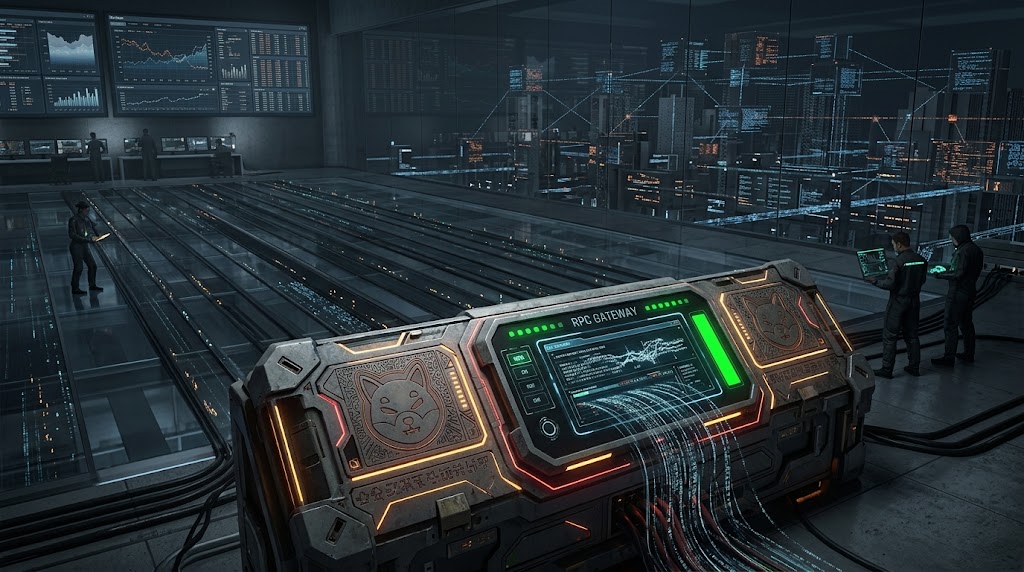
The project refreshed Shibarium’s RPC entry in the public ethereum-lists/chains registry, correcting the endpoint wallets and applications can discover through services such as Chainlist. It fixes a connection problem. It does not upgrade Shibarium’s consensus, increase throughput, add privacy or materially change SHIB token economics.
The distinction matters because the network’s larger issue is not whether a wallet can find the correct RPC. It is whether users have a reason to connect at all.
Shibarium once processed millions of transactions a day. Recent activity has fallen into the low thousands and, on some days, the hundreds. One year after a bridge exploit exposed weaknesses in validator control, basic infrastructure is being maintained while the ecosystem’s promised privacy upgrade remains unfinished.
What Actually Changed This Week
RPC stands for Remote Procedure Call. It is the interface wallets and applications use to ask a blockchain node for data or send transactions. A stale RPC address in a public registry can make a functioning network appear unreachable to users relying on that registry.
The Shibarium change replaced outdated connection information in the ethereum-lists/chains registry so Chainlist and other tools can surface the current endpoint. A community contributor opened the pull request and the registry maintainers merged the correction.
That is useful operational maintenance. Calling it a network upgrade would overstate it. No new execution capability was added, gas economics did not change and users did not receive a new Shibarium feature.
The Traffic Problem Is Several Orders of Magnitude Larger
The maintenance arrived against a difficult usage backdrop. Independent reporting using Shibariumscan data says daily transactions have dropped from the million-level periods the chain once recorded to low-thousand and occasionally sub-thousand readings.
That makes the bottleneck visible. A correct RPC removes friction for the users who want to connect. It does not manufacture applications, liquidity or recurring transaction demand.
Optimisus flagged the same issue in August when Shiba Inu turned six with its major FHE privacy upgrade still undelivered. At the time, Shibarium daily transactions had recovered only to roughly 1,180 from around 661. The number was small enough that a single application could materially change the daily chart.
The 2025 Bridge Exploit Still Matters to the 2026 Usage Story
Shibarium’s decline cannot be reduced to one event, but the September 2025 bridge attack remains relevant context. The attacker temporarily gained enough validator power to authorize malicious withdrawals, draining roughly $2.4 million in assets before the team restricted network functions and secured validator keys.
The technical lesson was about governance assumptions rather than raw transaction capacity. A Layer 2 can process millions of transactions and still carry concentrated operational risk if control over checkpoints, bridges or validators is compromised.
For users, rebuilding confidence after an incident requires more than restoring the chain. It requires applications worth returning for and security assumptions users can understand.
The Privacy Upgrade Would Be a Real Upgrade
Shibarium’s more consequential roadmap item is its planned fully homomorphic encryption work with Zama. FHE can allow computation on encrypted data without first revealing the underlying information. In a public blockchain environment, that could enable private state and private interactions while retaining verifiable computation.
Shiba Inu’s own ShibOS materials still describe an upcoming FHE-enabled testnet. The project originally targeted the second quarter of 2026, but that window passed without a release and no firm replacement date has been announced.
That is the development worth distinguishing from this week’s RPC fix. One keeps the existing network reachable. The other could give developers a new reason to build on it.
SHIB Has Been Better at Generating Market Activity Than Network Activity
The token itself can still move independently of Shibarium usage. Optimisus documented a 36% one-day SHIB rally in July with no major project announcement behind it, driven instead by trading concentration, liquidations and broader meme-market structure.
That separation is the core issue. SHIB can remain a liquid meme asset even while Shibarium is quiet. Shibarium can also improve technically without automatically increasing demand for SHIB. Investors should not treat those two systems as the same metric.
This week fixed an address in a registry. The next meaningful Shibarium story begins when people start using the address.
This article is for informational purposes only and is not financial advice.
Sources
- Shiba Inu documentation — ShibOS / Bury 2.0 — Official Shibarium metrics and FHE privacy roadmap.
- CryptoPotato — Shibarium RPC update — Current reporting on the registry refresh and recent network activity.
- ethereum-lists/chains — GitHub repository — Public registry used by Chainlist and wallet tooling.
- The Block — 2025 Shibarium bridge exploit — Background on the bridge attack, validator control and response.