The U.S. Securities and Exchange Commission has created a temporary regulatory lane for trading tokenized versions of U.S.-listed stocks onchain.
The order, issued September 17, gives qualifying Tokenized Securities Venues conditional relief from being treated as exchanges under parts of the Securities Exchange Act. Covered liquidity providers can receive related dealer relief. The exemption runs until September 17, 2031.
That sounds like a technical compliance adjustment. In market-structure terms, it is much larger. The SEC is allowing a limited version of crypto-style automated trading to touch National Market System stocks while preserving the legal rights attached to the underlying shares.
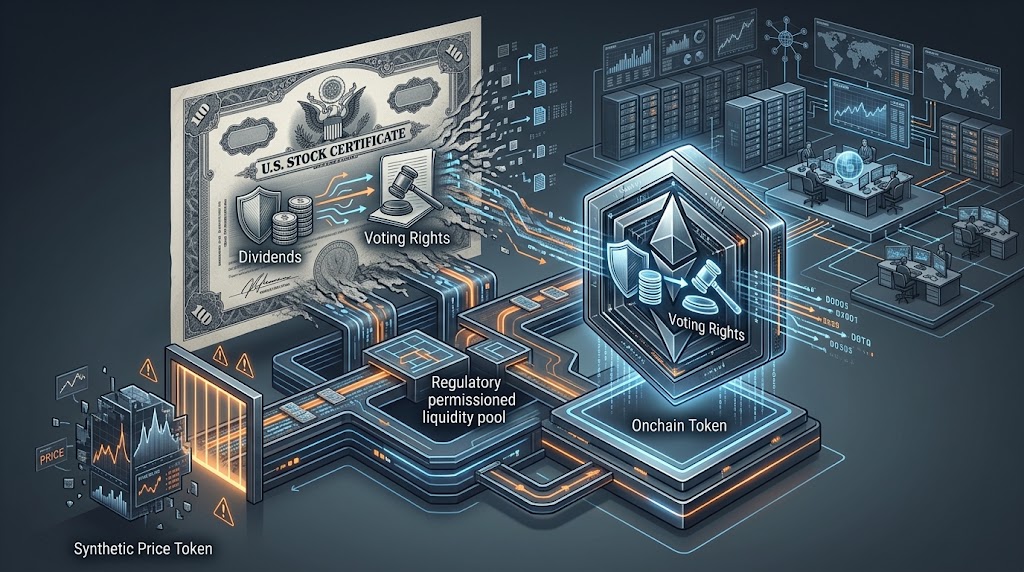
It also draws a line through one of tokenization’s most confusing categories: a token that merely tracks Tesla or Nvidia is not the same thing as a tokenized Tesla or Nvidia share. Under the exemption, synthetic lookalikes do not qualify.
The Token Must Carry the Real Shareholder Rights
The SEC says eligible tokenized NMS stocks must provide holders with the same rights and privileges as the traditional security, including dividend and voting rights. The token can be created by the issuer or by an unaffiliated third party, but the economic and governance claim must remain tied to the real stock.
That requirement excludes the synthetic equity products that have become common on offshore crypto venues. A perpetual future can mirror a stock price without giving the trader ownership, voting rights or dividends. Some tokenized wrappers do the same. Those products may be useful trading instruments, but they are not what this exemption is designed to authorize.
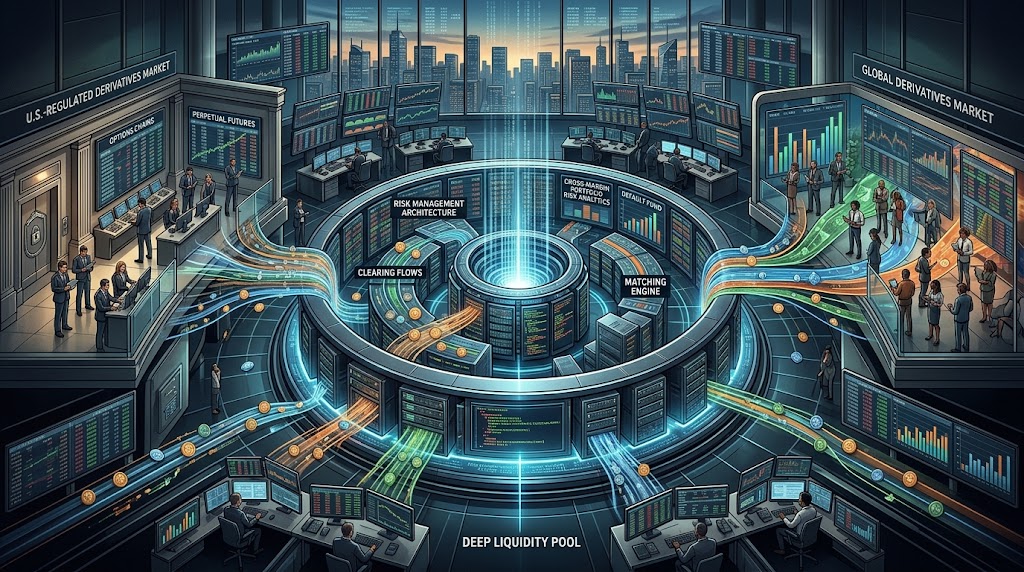
Optimisus recently documented how large that parallel market has already become: perpetual futures on U.S. stocks reached roughly $445 billion in monthly volume on Binance. The SEC framework targets a structurally different product — the security itself, represented onchain.
Companies Get a Veto Over Third-Party Tokenization
The exemption does not let a platform tokenize any public company without warning. A venue must give the underlying issuer an opportunity to object. If the company objects, its stock cannot be traded through the exempt tokenized venue under the order.
That condition addresses a complaint that has followed tokenized equities since their latest expansion: public companies can find blockchain products using their names and prices without participating in the product or controlling how shareholder rights are represented.
Issuer objection changes that dynamic. Tokenization can still come from a third party, but it cannot simply route around the company indefinitely.
The Trading Model Looks More Like DeFi Than a Traditional Exchange
The SEC order specifically contemplates permissioned automated market makers and liquidity pools. That imports one of crypto’s core market structures into regulated equity trading.
Traditional stock markets match orders through centralized exchange infrastructure. Automated market makers instead use pools and pricing formulas, with liquidity providers supplying assets to the market. The SEC is not declaring AMMs superior. It is allowing controlled experimentation with them under conditions.
This connects directly to another regulatory shift Optimisus covered earlier this month, when the SEC proposed allowing corporate share registers themselves to be maintained on distributed ledgers. One proposal changes the ownership record. The new exemption changes where and how that ownership can trade.
Nasdaq and Kraken Were Already Building for This World
The private sector has been moving ahead of the exemption. Nasdaq agreed this month to invest $100 million in Payward, Kraken’s parent, while the companies work on a regulated tokenized-equity framework called Nasdaq Equity Tokens.
Optimisus covered that deal as market infrastructure rather than a generic crypto investment. The SEC order now gives that broader industry a more concrete U.S. experimentation path.
The exemption is temporary, conditional and subject to public comment. It is not a permanent rewrite of securities law. The Commission explicitly says the experiment is intended to inform future rulemaking rather than lock today’s technology into place.
The Most Important Word Is Ownership
Tokenized stocks are often discussed as if the innovation is 24/7 trading. That is only part of it. Crypto exchanges already provide round-the-clock synthetic equity exposure outside the United States.
The harder problem is keeping legal ownership, dividends, voting, issuer rights, custody and settlement aligned when the asset moves onto a blockchain. The SEC’s conditions make those rights the center of the experiment.
The result is narrower than “stocks are now crypto.” It is more consequential: U.S. regulators are testing whether blockchain can become an official rail for the same stock, rather than a separate market that imitates it.
This article is for informational purposes only and is not financial advice.
Sources
- SEC — Innovation Exemption press release — Primary announcement and conditions for tokenized NMS stock trading.
- SEC — Exemptive Order 34-106402 — Official order and public-comment materials.
- SEC Chair statement — Details on shareholder rights, issuer objections and temporary status.
- Reuters — U.S. tokenized stock exemption — Independent reporting on market implications and industry participants.