Many investors treat older, well-known cryptocurrencies as safe havens compared to new presales. Yet, the real-world performance of Avalanche and Polygon challenges that belief. Both platforms dominated the previous bull run as premier layer-1 and layer-2 scaling solutions, pulling in top developers and institutional support. Today, both assets trade at prices that would shock anyone who bought near their historic highs. Being an early success story in a past cycle failed to shelter holders from multi-year declines, and neither token shows signs of regaining its former stature.
This ongoing drag forces market participants to reconsider where genuine opportunity lies. When a token undergoes a complete boom-and-bust cycle, it accumulates heavy selling pressure and historical price chart damage that must be unwound before any true rebound can take place. In contrast, an asset still in its presale stage operates without that historical weight. Fixed pricing stages dictate its valuation instead of emotional open-market trading. The BlockDAG (BDAG) presale fits this early-stage framework, making it critical to examine why this structural distinction matters.
Avalanche Struggles to Move Higher Despite Solid On-Chain Foundations
During the 2021 market surge, Avalanche climbed near $145 on the back of its fast, inexpensive smart contract execution and ambitious subnet architecture. The network remains fully operational today, with active validators securing the chain, developers creating new subnets, and even a spot Avalanche ETF distributing staking rewards to institutional investors. Fundamentals on the network remain intact.
Despite this underlying activity, the market price remains pinned near multi-year lows. Trading around $6.40, AVAX sits approximately 95.6% below its all-time high, with technical indicators reflecting a persistent bearish outlook across short, medium, and long timeframes. For investors who entered near the 2021 top, Avalanche demonstrates how sharply an asset can fall—and how long it can stay depressed—even while its core network functions as designed.
Polygon Suffers a Sharp Valuation Collapse Amid Growing Adoption
Polygon presents an even more dramatic example of this valuation gap. After migrating from MATIC at a 1:1 ratio to become POL, the token originally peaked at $2.92 in December 2021 due to its role in cutting Ethereum transaction costs. Development has continued unabated since then, delivering upgrades that boost transaction speed and reliability. Furthermore, Polygon has integrated with major retail partners to process real-world point-of-sale stablecoin payments.

However, operational progress has not translated into price gains. POL trades near $0.075, down about 97% from its highest mark. Market commentators frequently highlight the stark contrast between Polygon’s expanding utility and its stagnant market valuation. Polygon demonstrates that superior technology and real-world adoption cannot automatically rescue an asset’s price once it completes a full boom-and-bust cycle.
BlockDAG (BDAG) Introduces a Pre-Market Stage Progression Model
The BlockDAG (BDAG) presale operates under a mechanism distinct from the open-market history of Avalanche or Polygon. Rather than starting on public exchanges, Stage 1 opens at $0.002. This represents the first of 25 fixed stages that step upward toward a final presale price of $0.05, setting up a $0.10 launch reference price. Because the token has not yet debuted on public markets, it carries no long-term chart of decline or accumulated selling resistance. Each price level moves systematically higher as part of a planned roadmap.
This pricing structure rests on a working operational ecosystem. The BlockDAG blockchain is live and processing transactions, while BlockDAG Casino provides a working product for consumer transactions today. Physical mining hardware is already being shipped to buyers globally, and the BlockDAGX exchange is in development to provide liquidity and trading utility.
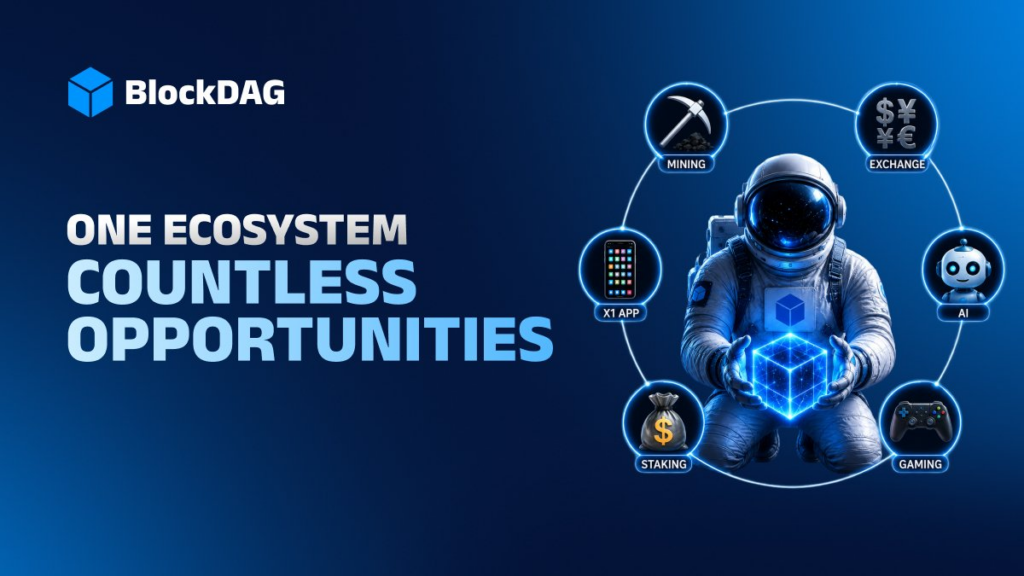
Additionally, developers are building a Super App to integrate wallet management, mining, trading, swaps, payments, and rewards into a single portal. To support trading when BDAG hits the open market, $100 million in launch liquidity is reserved, creating a foundation that neither Avalanche nor Polygon possessed at their launch.
Final Thoughts
The trajectories of Avalanche and Polygon reveal that strong technology and growing real-world use do not guarantee a price recovery after a major crash. Both assets remain deeply depressed years after reaching their peaks, regardless of ongoing development. The BlockDAG (BDAG) presale introduces a different framework: a $0.002 Stage 1 baseline, a structured 25-stage ladder leading to a $0.10 launch reference, and an active product ecosystem built prior to public trading.
For investors seeking alternatives to coins weighed down by past cycles, a presale with a clean slate presents a compelling strategic path.
Explore BlockDAG Now:
Presale: https://purchase.blockdag.network
Website: https://blockdag.network
Telegram: https://t.me/blockDAGnetworkOfficial
Discord: https://discord.gg/Q7BxghMVyu
Disclaimer: This press release is provided for informational purposes only and does not constitute financial, investment, legal, or other professional advice. Optimisus does not endorse, verify, or guarantee the accuracy of any claims made about the companies, individuals, products, or services mentioned. Readers should conduct their own independent research and consult a qualified professional before making financial or other decisions. Optimisus accepts no liability for any loss or damage arising directly or indirectly from reliance on, or use of, the information contained in this press release.