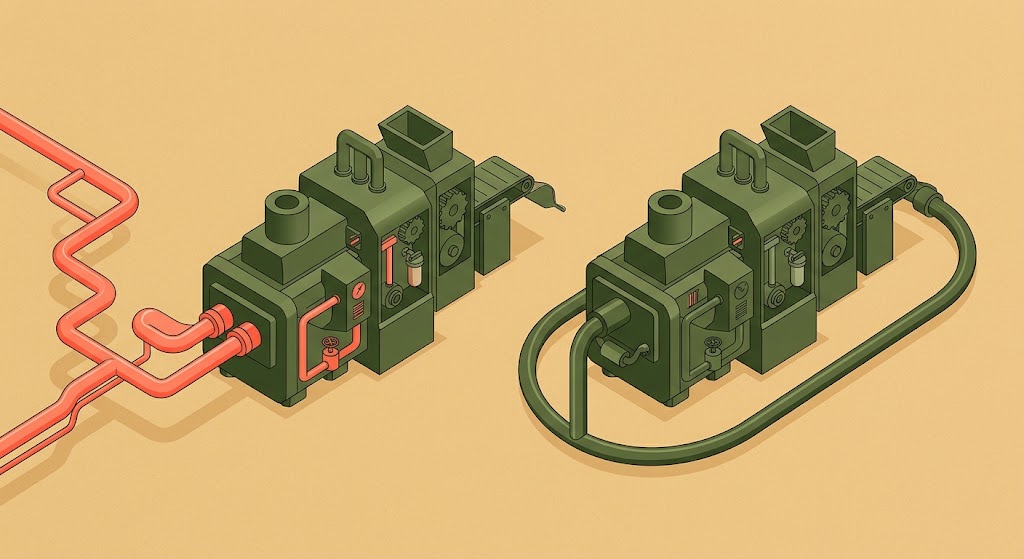
In fall 2021, Axie Infinity had 2.7 million daily active users. Filipino players were earning more grinding digital monsters than they could at local jobs.
By April 2026 the game had roughly 5,500 daily active users.
That is the shape of the entire sector in one line.
What the Data Says
A report from Caladan, a market-making and trading firm, analyzed more than 3,200 Web3 gaming projects covering the period from 2020 to early 2026.
Its finding was that roughly 93% of GameFi projects are effectively dead, defined by extremely low activity rather than formal closure.
Token values across the sector are down around 95% from their 2022 peaks. More than 300 blockchain games have shut down entirely.
Venture funding fell from roughly $4 billion in 2022 to around $360 million in 2025.
Total capital deployed across the period is reported as between $12 billion and $15 billion depending on the estimate. Caladan’s point is that the range barely matters, because nearly all of it was destroyed.
| Metric | Peak | Early 2026 |
| Axie Infinity daily active users | about 2.7 million | about 5,500 |
| Annual sector venture funding | about $4 billion (2022) | about $360 million (2025) |
| GameFi share of Web3 venture capital | about 62.5% | sharply lower |
| Token prices vs all-time high | n/a | down about 95% |
| Projects effectively dead | n/a | about 93% of 3,200 studied |
| Games shut down | n/a | more than 300 |
The Structural Mistake
Play-to-earn was not a game design. It was a yield product wearing a game.
Rewards came from newly minted tokens rather than from revenue. That meant the payout to existing players depended on new players arriving and buying in.
When inflows slowed, reward tokens fell, which reduced the incentive to play, which reduced inflows further. The loop ran in reverse at the same speed it had run forward.
This is not a subtle failure mode. It is the same arithmetic that governs any system paying existing participants from new deposits, and it was visible in the tokenomics documents from the start.
Why the Games Themselves Did Not Save Them
The second failure is simpler and less discussed. Most of these were not good games.
Web3 titles typically required wallet setup, seed phrase management, network switching and gas payments before a player reached any gameplay. Mainstream games require none of that.
One industry estimate put player churn at around 60% within 30 days for Web3 games.
The comparison that mattered was never against other blockchain games. It was against free mobile titles with polished onboarding, and the sector lost that comparison consistently.
Caladan’s conclusion is that GameFi did not fail for lack of technology, capital or potential audience. It failed because it built economies before it had games worth playing.
What Survived, and What It Tells You
A small number of projects are still operating, and the pattern among them is consistent.
The distinguishing feature is where rewards come from. Projects distributing a share of actual revenue, from trading fees or in-game purchases, rather than freshly minted tokens, have avoided the inflation spiral.
Retention figures around 35% to 45% have been reported for the strongest Web3 titles, which is roughly comparable to conventional games. Those players are present for the game rather than for a payout.
That is the whole distinction. A game that would be worth playing with the token removed is a game. Anything else is a distribution scheme with graphics.
The Capital Rotation
Where the money went is instructive.
Animoca Brands, long one of the sector’s most aggressive backers with more than 380 Web3 investments including The Sandbox, Axie Infinity and Yield Guild Games, has reportedly cut pure gaming exposure to around a quarter of its portfolio.
Its reported focus shifted toward tokenization services, treasury management and stablecoin products, seeking steadier cash flows than in-game economies produced.
Sector-wide, capital rotated into AI, real-world asset tokenization and layer 2 infrastructure.
Optimisus covered the parallel decline in the adjacent metaverse category in the piece questioning The Sandbox’s future as metaverse hype faded.
Reading a Dead-Cat Bounce Correctly
Gaming tokens including AXS, SAND and GALA posted gains of around 300% in the early months of 2026.
That sounds like recovery and mostly is not. A 300% gain from a base down 95% still leaves an asset far below where it started, and data providers have described these moves as exceptions rather than a trend reversal.
Individual catalysts do produce real moves, as Optimisus covered when AXS rose 13% on an Apple App Store listing. A distribution win is not the same as a demand recovery.
The Transferable Lesson
The GameFi collapse is the cleanest available case study in a pattern that recurs across crypto sectors.
Ask where the yield comes from. If the answer is token emissions rather than revenue from someone outside the system, the model requires continuous new entrants to function.
Ask whether the product would exist without the token. If removing the token removes the reason to participate, the token is the product and the wrapper is marketing.
Those two questions would have flagged most of the $15 billion before it was spent, and they apply just as directly to sectors currently attracting capital.
Supply mechanics are the other half of the picture, covered in our explainer on token unlocks and vesting.
Sources
- CoinDesk, More than 90% of Web3 games failed after $15 billion boom as gamers never showed up — https://www.coindesk.com/markets/2026/04/23/more-than-90-of-web3-games-failed-after-usd15-billion-boom-as-gamers-never-showed-up-caladan
- DailyCoin, GameFi collapse deepens, 93% of Web3 games fail, funding evaporates — https://dailycoin.com/gamefi-collapse-deepens-93-of-web3-games-fail-funding-evaporates/
- Crypto.news, GameFi is effectively dead as 93% of projects collapse — https://crypto.news/gamefi-is-effectively-dead-as-93-of-projects-collapse/
- Incrypted, The rise and fall of Web3 games, 93% of projects turned out to be dead — https://incrypted.com/en/the-rise-and-fall-of-web3-games-93-of-projects-turned-out-to-be-dead/
- CCN, Did Web3 gaming die in 2025, the five reasons behind GameFi’s decline — https://www.ccn.com/news/crypto/web3-gaming-die-in-2025-the-five-reasons-behind-gamefi-decline/
- BitPinas, List of Web3 game shutdowns in 2026 — https://bitpinas.com/learn-how-to-guides/list-of-web3-game-shutdowns/
This is not financial advice.
Optimisus covers crypto and technology news for readers who want the details behind the headline.