The Clearing House clears and settles more than $2 trillion in U.S. payments every day. It has now selected Quant to build the technology layer for a tokenized-deposit network expected to become available to participating financial institutions in the first half of 2027.
That makes the announcement bigger than the QNT token rally surrounding it. The institution connecting some of America’s largest banks is designing a form of on-chain money that keeps the legal structure of a bank deposit instead of issuing a separate stablecoin liability.
For crypto, that is a direct test of an assumption the industry has made for years: that moving dollars on-chain necessarily means issuing stablecoins.
What The Clearing House Is Actually Building
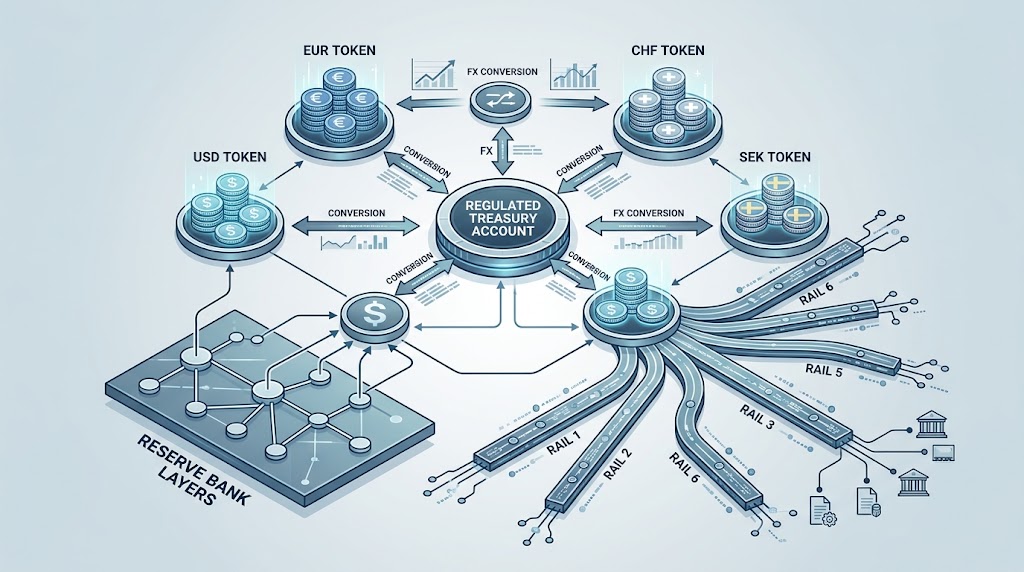
The project is called the On-Chain Money Initiative. Quant will provide the interoperability, orchestration and transaction-management layer coordinating the clearing and settlement of tokenized deposit transactions.
The network is also designed to connect to existing fiat payment systems including RTP and CHIPS rather than replacing them outright. That is important. The objective is not to create an isolated blockchain rail. It is to let tokenized bank money communicate with the payment infrastructure institutions already use.
The Clearing House says the system is intended for use cases including corporate treasury, liquidity management, cross-border payments and digital-asset settlement.
A Tokenized Deposit Is Not the Same Liability as USDC or USDT
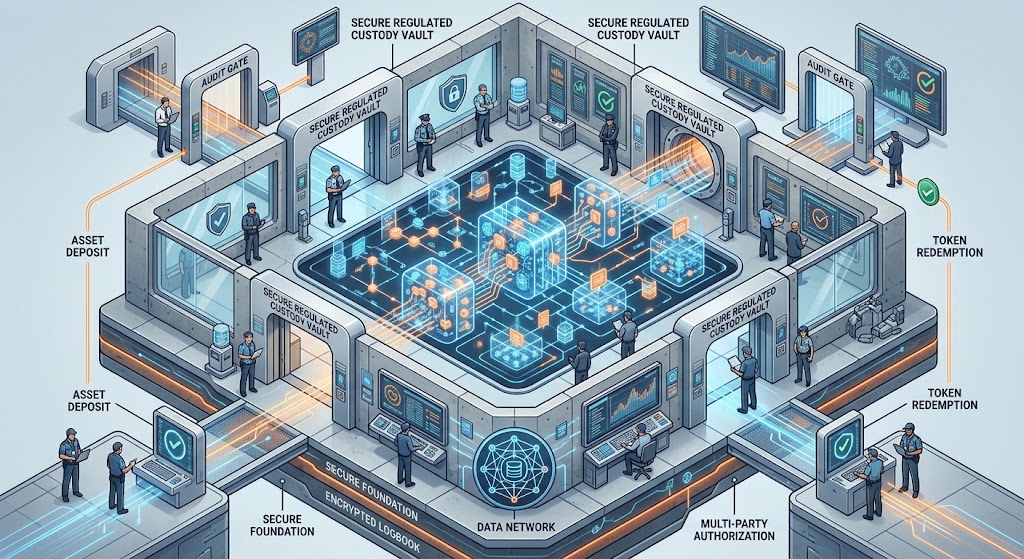
A stablecoin is generally a liability of the stablecoin issuer backed by a pool of reserve assets. A tokenized deposit is a digital representation of a deposit liability at a regulated financial institution.
That legal distinction changes who owes the money, which protections apply, how the balance sits on a bank’s balance sheet and how redemption works. The token can move using distributed-ledger infrastructure without turning the underlying claim into a separate private currency.
This is why banks have continued experimenting with tokenized deposits even while the stablecoin market grows. They are not only trying to copy USDC. They are trying to put the bank account itself onto programmable rails.
The Architecture Is Converging With Tokenized Securities
Optimisus has been tracking the same pattern on the asset side. DTCC recently partnered with BitGo around tokenized treasuries and equities infrastructure, while the European Central Bank launched Pontes to settle tokenized assets in central-bank money.
Those projects attack different parts of the same transaction. Tokenized securities need an asset leg. They also need a cash leg. The Clearing House project is a candidate for that cash leg inside commercial banking, just as Pontes is building one using euro-system central-bank money.
If both sides become programmable, settlement can move from a sequence of reconciliations into a single coordinated transaction. That is the institutional promise behind tokenization, and it has little to do with putting a stock certificate image on a blockchain.
Where Quant Fits – and What the QNT Price Does Not Prove
Quant’s role is clearly documented: its technology will provide interoperability, orchestration and transaction management for the network. The announcement does not, by itself, explain what direct economic demand the production network creates for the QNT token.
That distinction matters because QNT rallied sharply after the partnership became public. A commercial software mandate can be fundamental news for the company or protocol ecosystem without every dollar of network activity automatically translating into token demand.
Investors therefore need to separate two questions. First: is Quant being embedded into meaningful U.S. banking infrastructure? The announcement says yes. Second: what does that usage require economically from QNT holders or circulating supply? That requires product-level details that have not yet been fully published.
Banks Are Not Choosing One Form of On-Chain Money
The most likely outcome is not stablecoins versus tokenized deposits with one winner. Different liabilities are useful for different users. A global exchange may prefer a bearer-like stablecoin that moves across venues. A corporate treasurer may prefer a tokenized bank deposit that stays inside a regulated banking relationship. A securities settlement system may prefer central-bank money.
The important development is that all three are being built on compatible digital rails at the same time. Once money becomes programmable, the competitive question shifts from which token wins to which liability institutions are willing to hold for a specific transaction.
The Clearing House deal is one of the clearest signs yet that U.S. banks intend to answer that question with their own deposits, not only with somebody else’s stablecoin.
This is not financial advice.
Sources
- The Clearing House / PR Newswire – Quant selected for On-Chain Money Initiative – Primary announcement detailing Quant’s role, RTP/CHIPS connectivity and 2027 target.
- The Clearing House – Background on U.S. payment networks operated by The Clearing House.
- Finextra – The Clearing House taps Quant for tokenised deposit network – Independent industry coverage of the partnership.