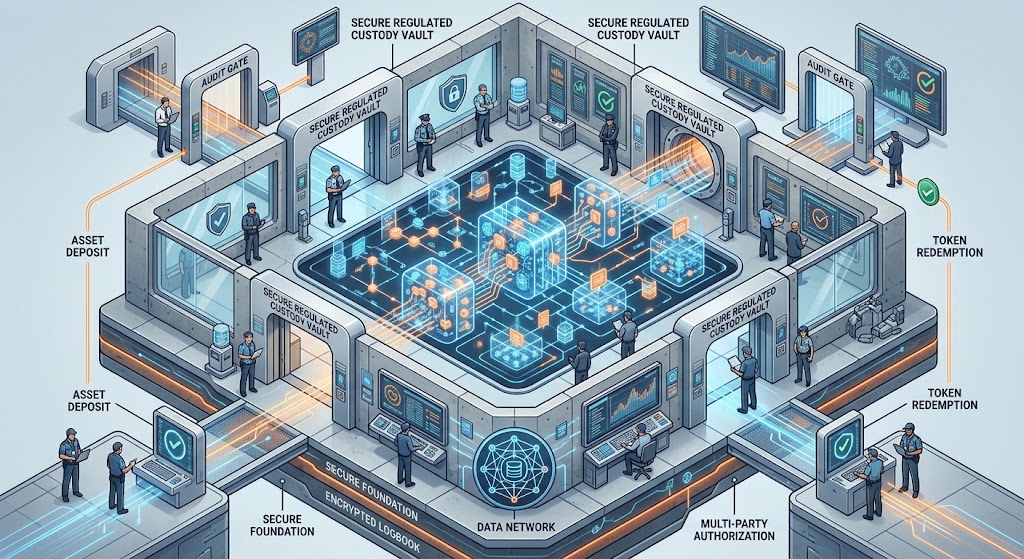
Aztec has brought zk.money back three years after shutting down the original product.
The new wallet runs on Aztec Network and hides balances, payment amounts and counterparties once funds are inside the private environment. Users can send money to readable names or payment links rather than exposing a normal Ethereum account history.
The design has an important limitation that is also one of its most honest features: entering the system is not invisible.
Users deposit DAI, USDC or USDT from Ethereum. Those Ethereum deposits remain publicly traceable, and USDC or USDT are converted to DAI on the way in. Privacy begins after the bridge into Aztec, not before it.
A Private Payment Is Not the Same as an Untraceable Funding Source
Public blockchains leak more financial context than most payment users would tolerate in a bank account. Give someone an Ethereum address and they can often inspect its balance, token holdings and transaction history indefinitely.
zk.money is designed to break that link for activity inside Aztec. The recipient does not need to see the sender’s full wallet history, and outside observers do not see the private balance or transfer amount in the same way they would on Ethereum mainnet.
But the deposit transaction still exists on Ethereum. If a known address sends funds into the system, an observer can see that it entered Aztec even if subsequent private transfers are concealed.
That makes zk.money closer to a privacy layer than a magic eraser. It reduces what future payments reveal without pretending the public on-ramp never happened.
The New Version Is Deliberately Small
CoinDesk reports that the early Alpha caps individual deposits, payments and withdrawals below $2,500. The wallet also screens addresses under a sanctions policy and has not yet completed the full audit process expected for a mature financial product.
Those restrictions matter because privacy software is unusually unforgiving. A normal wallet bug can lose funds. A privacy-system bug can also leak information users believed was hidden.
Aztec has history here. The earlier zk.money and Aztec Connect products were shut down as the team moved toward a new privacy-native network architecture. The relaunch therefore should not be read as a continuation of the old system with a fresh interface. It is a product built on the newer network.
Privacy and Compliance Are Being Designed Together
Crypto privacy is often discussed as a binary choice between total anonymity and total surveillance. The new zk.money does not fit neatly into either category.
The wallet is self-custodial and private inside the network, but the service still applies sanctions screening and transaction limits in its Alpha release. The public deposit trail also creates an observable boundary between Ethereum and the private environment.
That architecture matters as regulators increasingly distinguish between holding privacy-preserving software and providing custodial anonymity services.
Optimisus covered that distinction in Europe, where the 2027 prohibition on licensed providers custodying anonymity-enhancing coins contains a carve-out for self-hosted wallet software. Privacy technology is not disappearing. It is being forced into more explicit product and legal boundaries.
DAI Becomes the Private Settlement Asset
The stablecoin conversion is another detail worth noticing. Users can enter with DAI, USDC or USDT, but CoinDesk reports that USDC and USDT are converted into DAI, leaving DAI as the currency used inside zk.money.
That reduces the number of assets the privacy system needs to support, but it also means a user depositing one stablecoin may end up holding exposure to a different stablecoin inside the private layer.
For users, that should be treated as a real asset conversion rather than a cosmetic routing step. Stablecoins can share a dollar target while having different issuers, reserve structures, governance and risk profiles.
Optimisus has repeatedly shown why those distinctions matter, including in its analysis of stablecoin supply shrinking even while transaction usage hit records.
The Bigger Test Is Whether Normal People Want Financial Privacy
Crypto has spent years proving that privacy can be implemented cryptographically. The harder product question is whether a private wallet can become simple enough that users choose it for ordinary payments rather than only for specialized use cases.
Readable names and payment links are an attempt to solve that. The privacy mechanism disappears behind a user experience that looks more like a payment app than a zero-knowledge protocol.
That is the relevant benchmark for the relaunch. Not whether zk.money can hide a transfer — Aztec demonstrated private payments years ago — but whether privacy can survive contact with sanctions screening, stablecoin conversion, bridge transparency, mobile-style usability and the expectations of users who do not want to think about zero-knowledge proofs.
A public blockchain makes transparency the default. zk.money is trying to make selective privacy feel ordinary instead.
This is not financial advice.
Sources
- CoinDesk — Ethereum users get another way to pay privately as zk.money returns — Detailed reporting on assets, public deposits, transaction caps and sanctions screening.
- The Block — Aztec relaunches zk.money privacy wallet — Independent reporting on the relaunch and privacy model.
- Aztec — History of Aztec — Primary background on the original zk.money shutdown and the newer Aztec architecture.
- Aztec — Public testnet introduction — Primary background on Aztec’s privacy-native network design.